 LaddoThis
Sikh Punjabi wedding ceremonies, in order
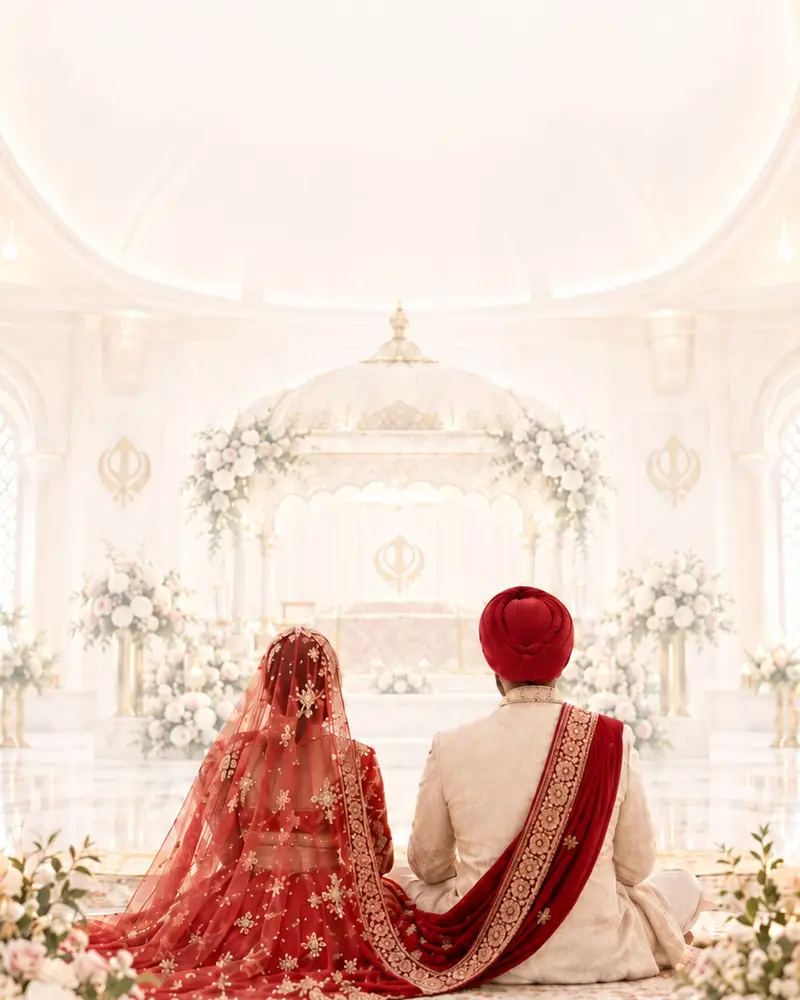
A Sikh Punjabi wedding usually moves through 19 ceremonies: Roka, Chunni Chadhana, Engagement (Kurmai), Sahe Chithi, Akhand Path, Sangeet, Maiyan, Mehndi, Nanki Shak, Jaggo, Chooda & Kalire, Gharoli, Sehra Bandi & Baraat, Milni, Anand Karaj, Doli, Paani Vaarna, Reception and Phera Pauna. Below is each one in order, when it usually happens and what it means. Customs vary between families and regions, so treat this as the common sequence, not a rule.
19 ceremonies282 checklist tasks in the app
At a glance
- 3-4 Months BeforeRoka ਰੋਕਾThe formal agreement to stop the search
- Chunni Chadhana ਚੁੰਨੀ ਚੜ੍ਹਾਉਣਾThe groom's family formally welcomes the bride
- Engagement (Kurmai) ਕੁੜਮਾਈThe formal engagement ceremony
- 1-2 Weeks BeforeSahe Chithi ਸਾਹੇ ਚਿੱਠੀThe formal wedding invitation letter
- Akhand Path ਅਖੰਡ ਪਾਠContinuous 48-hour reading of Guru Granth Sahib Ji, ending in Bhog
- 3-5 Days BeforeSangeet ਸੰਗੀਤThe grand musical celebration
- Maiyan ਮਾਈਆਂThe turmeric purification ceremony
- Mehndi ਮਹਿੰਦੀThe henna ceremony
- 1-2 Days BeforeNanki Shak ਨਾਨਕੀ ਸ਼ੱਕThe maternal family arrive with gifts and lead the Jaggo
- Jaggo ਜਾਗੋThe night-before procession — "Wake up!"
- Wedding MorningChooda & Kalire ਚੂੜਾ ਤੇ ਕਲੀਰੇBangles from the maternal uncle and ornamental dangles
- Gharoli ਘੜੋਲੀSacred morning bath using holy water from the Gurdwara
- Sehra Bandi & Baraat ਸਿਹਰਾ ਬੰਦੀ ਤੇ ਬਰਾਤThe groom is prepared and the procession begins
- Wedding CeremonyMilni ਮਿਲਣੀThe formal meeting of both families
- Anand Karaj ਅਨੰਦ ਕਾਰਜThe sacred Sikh marriage ceremony
- DepartureDoli ਡੋਲੀThe bride's emotional farewell
- Paani Vaarna ਪਾਣੀ ਵਾਰਨਾWelcome to the groom's home
- Post-WeddingReception ਰਿਸੈਪਸ਼ਨThe grand celebration hosted by the groom's family
- Phera Pauna ਫੇਰਾ ਪਾਉਣਾThe bride's first return to her parents' home
Roka ਰੋਕਾ
3-4 Months Before
The formal agreement to stop the search
Roka is the very first ceremony in a Sikh Punjabi wedding. The word means "to stop" — both families formally agree to the match and stop looking at other prospects.
The bride's father and close family visit the groom's home. Some families begin with an Ardaas (Sikh prayer) seeking Waheguru's blessings. The bride's father offers blessings by giving the groom shagun and feeding him ladoo. Both families exchange decorated thaals filled with sweets, fruits, and dry fruits. Shagun amounts are traditionally in odd numbers.
The ceremony is intimate — typically only close family members attend (15-30 people). In some families, only men attend; in others, the whole family comes. The bride is traditionally not present.
Why it matters
The word Roka has a very literal meaning — to stop the bride and groom from seeing any more prospective matches because their union is agreed upon. It symbolizes the involvement of parents and their wholehearted support for the match.
In LaddoThis: a Roka checklist with 8 tasks, 5 of them things to buy or prepare.
Chunni Chadhana ਚੁੰਨੀ ਚੜ੍ਹਾਉਣਾ
3-4 Months Before
The groom's family formally welcomes the bride
Chunni Chadhana means "draping the chunni." The groom's family visits the bride's home bringing beautifully decorated thaals filled with gifts — a red chunni (dupatta), an outfit, jewellery, cosmetics, sweets, fruits, and dry fruits.
The groom's mother drapes the red chunni over the bride's head, formally accepting her into the family. The bride is adorned with the gifted jewellery — necklace, earrings, and bangles. In some families, a phulkari (traditional Punjabi embroidered cloth) is used instead of a plain chunni. Some families pass down a family heirloom phulkari through generations.
The groom's father fills the bride's jholi (the fold of her dupatta) with handfuls of dry fruits. The couple is then fed sweets by the parents and given shagun.
--- Thaka (ਠਾਕਾ) ---
Thaka means "to set" or "to fix" and is the groom's family's reciprocation of the Roka. It sometimes happens on the same day as Chunni. The groom's family presents gifts and the wedding date is formally fixed.
Why it matters
The red chunni draped over the bride symbolizes the groom's family's formal acceptance of her as their future daughter-in-law. The groom's father filling her jholi with dry fruits is a token of welcoming her to the family. Red represents prosperity, happiness, and conjugal bliss in Punjabi culture.
In LaddoThis: a Chunni Chadhana checklist with 27 tasks, 20 of them things to buy or prepare.
Engagement (Kurmai) ਕੁੜਮਾਈ
3-4 Months Before
The formal engagement ceremony
Kurmai is the formal engagement — the biggest and most significant pre-wedding commitment ceremony. It is often held at a Gurdwara or at the groom's home.
The ceremony begins with an Ardaas before the Guru Granth Sahib, seeking blessings for the couple. Kirtan (hymns) may be sung. The bride's father or grandfather feeds the groom chhuhare (dried dates) while offering blessings. A red parna (scarf) is draped across the groom's shoulders by the bride's family.
The bride's family presents gifts to the groom — an outfit, shagun, and sometimes a kara. The groom's family reciprocates with jewellery and clothing for the bride. The couple exchanges engagement rings.
The event concludes with langar (communal meal) and celebration with dhol music and dancing.
Why it matters
After Kurmai, the engagement is considered binding. The chhuhare feeding ritual is particularly significant — the bride's grandfather or father feeds dried dates to the groom as a symbol of sweetness and commitment. The ceremony reinforces the bond between both families.
In LaddoThis: a Engagement (Kurmai) checklist with 18 tasks, 10 of them things to buy or prepare.
Sahe Chithi ਸਾਹੇ ਚਿੱਠੀ
1-2 Weeks Before
The formal wedding invitation letter
Sahe Chithi literally means "wedding letter." It is a formal invitation sent by the bride's family to the groom's family, officially confirming the wedding date and signalling that preparations should begin.
Traditionally, the Chithi was handwritten by the Gurdwara's Granthi Singh, inscribed with Ik Onkar in turmeric, and sometimes included verses from Gurbani. Today, families often purchase beautifully designed scrolls or cards in red and gold.
The letter is anointed with a few drops of saffron water (kesar) for auspiciousness and placed in a decorative box or tray. It is accompanied by sweets, dry fruits, gifts for the groom, and a shagun envelope.
Historically, a local barber (Nayi) acted as the messenger, delivering it from the bride's home to the groom's family — it was considered inauspicious for the girl's family to visit too frequently. In modern times, a Vichola (matchmaker) or a respected close relative carries it. The ceremony is intimate, involving only close family and elders.
Why it matters
Once the groom's family receives the Sahe Chithi, the wedding is considered fully confirmed and all final preparations begin on both sides. It marks the official green light for the sequence of pre-wedding rituals — Maiyan, Sangeet, Mehndi, and beyond.
In LaddoThis: a Sahe Chithi checklist with 9 tasks, 8 of them things to buy or prepare.
Akhand Path ਅਖੰਡ ਪਾਠ
1-2 Weeks Before
Continuous 48-hour reading of Guru Granth Sahib Ji, ending in Bhog
Many families begin the wedding with an Akhand Path — the complete Guru Granth Sahib Ji read aloud without interruption, taking roughly 48 hours. Pathis read in rotation so the reading never stops, and each family typically holds its own at their Gurdwara or at home.
It is usually started so that the Bhog — the concluding ceremony — falls on the weekend before the wedding, or on the morning of. The Bhog is followed by kirtan, Ardaas, a Hukamnama, and the distribution of Karah Prasad.
Langar is served throughout, and family members sit with the Path in turns as seva. Families who cannot host a full Akhand Path often hold a Sukhmani Sahib Path instead, which takes a few hours rather than two days.
Why it matters
The Akhand Path places the marriage under the Guru's blessing before any celebration begins. The unbroken reading is itself an act of devotion, and the seva around it — reading, cooking, serving — draws both families into the preparation together.
In LaddoThis: a Akhand Path checklist with 14 tasks, 2 of them things to buy or prepare.
Sangeet ਸੰਗੀਤ
3-5 Days Before
The grand musical celebration
Sangeet means "music" — it is a grand celebration of the upcoming wedding held 2-5 days before the ceremony. Traditionally hosted by the bride's family, modern families often hold joint Sangeets.
The evening features traditional Boliyan (Punjabi folk songs) sung by elder women with dholak accompaniment. Giddha (women's folk dance) is performed. Both families prepare choreographed dance performances, often rehearsed for weeks.
Modern Sangeets feature elaborate choreography, DJs playing a mix of Punjabi and Bollywood music, and an open dance floor for all guests. Lavish food is served throughout.
Why it matters
The Sangeet bonds the two families through joy, music, and dance before the solemnity of the wedding. Historically a women-only event where the bride's female relatives sang folk songs, it has evolved into a grand co-ed celebration.
In LaddoThis: a Sangeet checklist with 11 tasks, 3 of them things to buy or prepare.
Maiyan ਮਾਈਆਂ
3-5 Days Before
The turmeric purification ceremony
Maiyan is the turmeric cleansing ceremony held 1-5 days before the wedding. Both families perform it separately at their own homes.
The bride or groom sits on a patri (wooden plank). A phulkari dupatta is held above their head by four married female relatives, creating a canopy. Vatna paste (turmeric, chickpea flour, and mustard oil) is prepared and applied — first by the mother, then aunts, then cousins and friends, who often playfully smear it everywhere.
Gaaney (red sacred threads) are tied on the wrists of the bride/groom and all female guests. The ceremony concludes with the mother feeding five bites of something sweet (usually ladoo). A ritual bath follows to wash off the Vatna.
--- Gaana (ਗਾਣਾ) ---
After the Maiyan bath, the maternal uncle (Mama) ties the wedding Gaana — an elaborate protective thread adorned with cowrie shells, pieces of iron, pearls, a sugar pouch, and ghungroos (bells) — on the bride's left wrist and the groom's right wrist. The Gaana stays on through the wedding day.
Why it matters
Turmeric symbolizes purity, blessing, good luck, and prosperity. The paste is believed to purify the skin, create a natural glow, and ward off negativity. The phulkari canopy and gaaney threads are protective symbols. The mother feeding sweets symbolizes her last nurturing act before her child's new chapter begins.
The Gaana components each carry protective symbolism — cowrie shells and iron ward off evil, sugar brings sweetness, pearls represent prosperity.
In LaddoThis: a Maiyan checklist with 23 tasks, 20 of them things to buy or prepare.
Mehndi ਮਹਿੰਦੀ
3-5 Days Before
The henna ceremony
A professional Mehndi artist applies intricate henna designs on the bride's hands, arms, feet, and sometimes shins. The bride's design is the most elaborate, taking 2-4 hours. The groom's name is hidden within the bride's design — he must find it later.
Female friends and relatives also get henna applied. The groom gets a small design on his palm. Traditional Mehndi songs are sung with dholak accompaniment while the henna dries.
Each family typically holds Mehndi separately at their own homes, though the bride's side is the main event.
Why it matters
It is believed that the darker the henna stains, the more love the bride will receive from her in-laws. Mehndi has natural cooling and calming properties — it relieves pre-wedding stress. It is a symbol of good luck and prosperity.
In LaddoThis: a Mehndi checklist with 11 tasks, 5 of them things to buy or prepare.
Nanki Shak ਨਾਨਕੀ ਸ਼ੱਕ
1-2 Days Before
The maternal family arrive with gifts and lead the Jaggo
Nanki Shak is the maternal family's formal contribution to the wedding, and it happens at both the bride's and the groom's home — whichever of them is getting married, the nanke arrive for their own side.
The nanke (mother's family) arrive dressed for the occasion the day before the wedding, usually as a group — the nanka mel. They are welcomed at the door with tel chona, mustard oil poured on the doorframe.
They then present their gifts publicly to the parents: traditionally clothes, jewellery and cash. Historically the mama bought the wedding outfit outright. Once the gifting is done, the nanke lead the Jaggo that night.
Why it matters
The nanke's gifts are a public statement that the mother's family stands behind the marriage. In a culture where a bride traditionally left her own family, the maternal line's visible support carried real weight — and it still does.
In LaddoThis: a Nanki Shak checklist with 12 tasks, 6 of them things to buy or prepare.
Jaggo ਜਾਗੋ
1-2 Days Before
The night-before procession — "Wake up!"
Jaggo means "wake up!" — an all-night celebration the night before the wedding. Both families do this separately at their own homes and neighbourhoods.
A copper or brass vessel (khadda) is decorated with flowers, mirrors, and bells. Clay oil lamps (diveh) are placed inside and lit with mustard oil. The bride or groom's mami (maternal aunt) places the decorated, lit vessel on her head.
Another woman carries a long stick with bells (jaggo stick) and shakes it rhythmically. The family forms a procession and dances through the streets, visiting friends' and relatives' homes. At each home they are welcomed with sweets, they dance, and move on. Dhol players accompany the procession. The celebration continues until the early morning hours.
Why it matters
This tradition originated centuries ago when villagers walked through their village carrying pots with oil candles, singing to inform and invite the entire community to the wedding. It represents community involvement, joy, and the communal nature of Punjabi weddings.
In LaddoThis: a Jaggo checklist with 20 tasks, 8 of them things to buy or prepare.
Chooda & Kalire ਚੂੜਾ ਤੇ ਕਲੀਰੇ
Wedding Morning
Bangles from the maternal uncle and ornamental dangles
The Chooda ceremony is one of the most emotionally significant pre-wedding rituals. The bride's maternal uncle (mama) and aunt (mami) arrive with a set of 21 red and cream bangles.
The bangles are purified by soaking in a mixture of milk and rose petals. The bride must close her eyes — she must NOT see the Chooda before it is on her wrists (considered unlucky). The mama slides the bangles onto her wrists — red and cream alternating. The bangles are immediately covered with a white cloth (subar) so the bride cannot see them until after the wedding. The mama also gives shagun (gifts and money).
--- Kalire (ਕਲੀਰੇ) ---
Immediately after, the bride's mama and mami tie kalire — umbrella-shaped dangling ornaments — to the Chooda bangles. Sisters, cousins, and friends each add their own kalire with blessings.
All unmarried girls then line up. The bride shakes the kalire over each girl's head. If a piece falls on someone, she is believed to be next to get married — like a Punjabi bouquet toss.
Why it matters
The mama holds a deeply honoured role in Punjabi culture — he represents the maternal family's final blessing. Red symbolizes love, passion, and strength. Cream symbolizes peace and tranquility. The bride traditionally wears the Chooda for 40 days to one year.
Kalire were historically made of dried fruits and coconut tied to the bride's bangles as food for the long journey to her new village by palanquin. Over time, this practical origin became a ritual of blessings.
In LaddoThis: a Chooda & Kalire checklist with 12 tasks, 11 of them things to buy or prepare.
Gharoli ਘੜੋਲੀ
Wedding Morning
Sacred morning bath using holy water from the Gurdwara
Gharoli is a sacred morning-of-wedding ritual performed at both homes. The groom's sister and the bride's bhabhi each visit the Gurdwara early in the morning to fill a beautifully decorated clay pot (gharoli) with holy water. She carries it back on foot, accompanied by female relatives singing boliyan (folk songs) along the way.
Once home, the holy water is used by the groom — and by the bride at her own home — to bathe, spiritually cleansing and purifying them before the wedding ceremony. The gharoli is decorated with flowers, ribbons, and sometimes mirrors.
Why it matters
Water is considered a sacred element in Sikhism, representing spiritual cleansing and prosperity. The bath with gharoli water symbolizes washing away past negativity and preparing the groom with a pure body and mind for the Anand Karaj. The sister's role honours the bond between siblings — she personally ensures her brother enters married life blessed and purified.
In LaddoThis: a Gharoli checklist with 8 tasks, 6 of them things to buy or prepare.
Sehra Bandi & Baraat ਸਿਹਰਾ ਬੰਦੀ ਤੇ ਬਰਾਤ
Wedding Morning
The groom is prepared and the procession begins
On wedding morning, the groom gets dressed in his sherwani or achkan. His father ties the wedding turban (pagdi) on his head. His sisters tie the kalghi (a feathered, gem-studded ornament) onto the turban, followed by the sehra — a curtain of golden ribbons or pearl strings that hang over his face.
The groom's bhabhi (sister-in-law) applies surma (kohl) to his eyes to ward off the evil eye, and receives a monetary gift for this. His mother places a coconut on his lap. Parents and elders bless him, feed him sweets, and give shagun.
The groom's father hands him a ceremonial sword. His sister drapes the palla (red scarf) across his shoulders — the same palla that will be used during the Palla Rasam at the Anand Karaj.
--- Ghodi Chadna (ਘੋੜੀ ਚੜ੍ਹਨਾ) ---
A decorated mare is prepared outside. Cash is waved around the groom (varna) to ward off the evil eye. The groom mounts the mare with a young boy called the sarbala sitting beside him. The baraat (wedding procession) begins — family and friends dance around the groom to the beat of the dhol.
Why it matters
The sehra marks the groom's readiness for marriage. The surma wards off evil spirits. The sword represents the groom's duty to protect his family. The sarbala represents innocence and good fortune. The baraat is a public celebration announcing the wedding.
In LaddoThis: a Sehra Bandi & Baraat checklist with 23 tasks, 15 of them things to buy or prepare.
Milni ਮਿਲਣੀ
Wedding Ceremony
The formal meeting of both families
When the baraat arrives at the Gurdwara or venue, the Milni begins. A Granthi Singh offers an Ardaas for the occasion.
Male elders from both families are formally introduced, starting with the oldest and working down — grandfathers, then fathers, then uncles, then brothers. Each pair exchanges flower garlands (milni mala) and embraces. The bride's family gives shagun to each of the groom's corresponding relatives.
Tea, snacks, or a light breakfast is served to the baraat. The bride is not present during the milni — she is inside the Gurdwara or in a separate room.
Why it matters
Milni means "to meet" — it symbolizes the formal union and acceptance of two families. The garland exchange represents mutual respect. The embrace signifies warmth and welcome.
In LaddoThis: a Milni checklist with 9 tasks, 4 of them things to buy or prepare.
Anand Karaj ਅਨੰਦ ਕਾਰਜ
Wedding Ceremony
The sacred Sikh marriage ceremony
The Anand Karaj — "Ceremony of Bliss" — is the only religious ceremony in a Sikh wedding, governed by the Sikh Rehat Maryada.
The Guru Granth Sahib Ji is installed on the Manji Sahib under a chandoa (canopy). Raagis sing kirtan as guests take seats on the floor. The groom enters first, offers Rumala Sahib, and sits facing the Guru Granth Sahib. The bride enters and sits to his left.
The Granthi Singh calls for the parents and couple to stand for the opening Ardaas. A Hukamnama (random reading) is taken — the Guru's personal blessing. The bride's father then performs the Palla Rasam — placing one end of the groom's palla into the bride's hands, symbolizing his blessings for the couple's journey together.
Four Laavan (marriage hymns by Guru Ram Das Ji) follow. For each laav, the hymn is recited, the couple bows, then walks clockwise around the Guru Granth Sahib with the groom leading, connected by the palla. After the fourth laav, the Anand Sahib (first 5 and last pauri) is recited, followed by a closing Ardaas and Hukamnama. Karah Prasad is distributed to the sangat.
Why it matters
The four Laavan represent the soul's journey toward union with the Divine:
1st Laav: Commitment to righteous living and dharma
2nd Laav: Removal of ego — replacing "I" with "we"
3rd Laav: Detachment from the world while living in it — like a lotus in water
4th Laav: Union with the Divine — the couple's love mirrors the soul's love for God
In LaddoThis: a Anand Karaj checklist with 18 tasks, 10 of them things to buy or prepare.
Doli ਡੋਲੀ
Departure
The bride's emotional farewell
After the Anand Karaj and langar, the bride prepares to leave with the groom's family. The bride's mother, sisters, and family gather for an emotional farewell.
The bride takes handfuls of puffed rice (phulian) and throws them backwards over her head toward her family. Her mother catches them in her dupatta — this symbolizes the bride wishing prosperity for her parents' home. The bride's brothers escort her to the decorated car. Tears flow as the bride embraces her parents, siblings, and family. The groom's mother or sister places a red dupatta on the bride's head. The couple departs together.
Why it matters
Doli is among the most emotionally charged moments of the wedding. It represents a new chapter. The puffed rice symbolizes the bride blessing her parents' home with continued prosperity even as she leaves.
In LaddoThis: a Doli checklist with 10 tasks, 6 of them things to buy or prepare.
Paani Vaarna ਪਾਣੀ ਵਾਰਨਾ
Departure
Welcome to the groom's home
When the couple arrives at the groom's house, the mother waits at the entrance. She performs paani varna — circling a vessel of water around the bride's head (traditionally seven times) to ward off negativity and welcome her with blessings. After each circle, the mother-in-law playfully tries to sip from the vessel, and the bride stops her.
Mustard oil is applied on both sides of the doorway. A small pot of rice is placed at the threshold — the bride kicks it over with her right foot, spilling rice into the home, symbolizing that she brings abundance. She enters with her right foot first.
The mother-in-law offers the bride a glass of sweetened milk. The bride touches it to her lips and passes it to the groom, who drinks it.
--- Mooh Dikhai & Games ---
The bride is seated and family members come one by one, lift her veil, bless her, and give gifts (shagun). This is how she formally meets her new family.
Playful games follow — the couple searches for rings in a bowl of opaque milk (whoever finds both first "rules the household"), they untie knotted strings together, and answer fun questions back-to-back.
--- Baar Rokai (ਬਾਰ ਰੋਕਾਈ) ---
At the same doorstep the groom's sister blocks the entrance and refuses to let the couple in until her brother gives her a gift — cash, gold or jewellery. Playful negotiation follows, with his friends trying to talk the price down and the sister holding firm. Only when she is satisfied does she step aside. Also known as Bhena da Naaka — the sister's checkpoint.
Why it matters
Paani Vaarna literally means "circling water." The water circling wards off the evil eye. The playful sipping game establishes a warm, teasing bond between the bride and her mother-in-law from the very first moment. The rice symbolizes prosperity, and the milk represents purity and nourishment.
In LaddoThis: a Paani Vaarna checklist with 18 tasks, 16 of them things to buy or prepare.
Reception ਰਿਸੈਪਸ਼ਨ
Post-Wedding
The grand celebration hosted by the groom's family
The Reception is a grand celebration traditionally hosted by the groom's family, held 1-7 days after the wedding. Some families hold two receptions — one from each side.
The couple makes a grand entrance and is seated on a decorated stage. Guests line up to offer blessings, give gifts (shagun envelopes), and take photos. A lavish dinner is served — Punjabi receptions are known for elaborate food.
Bhangra (men's folk dance) and Giddha (women's folk dance) are the highlights. Family members often prepare choreographed dance performances. DJs play Punjabi and Bollywood music.
Why it matters
The reception is the public acknowledgement and celebration of the marriage. It introduces the bride to the groom's wider social and professional network. It is a modern cultural addition — not a religious ceremony.
In LaddoThis: a Reception checklist with 23 tasks, 8 of them things to buy or prepare.
Phera Pauna ਫੇਰਾ ਪਾਉਣਾ
Post-Wedding
The bride's first return to her parents' home
Phera Pauna ("the bride's homecoming") takes place after the reception. The bride's brother goes to the groom's home to formally escort the couple back to the bride's parents' house.
The bride's parents welcome the daughter and son-in-law warmly. It is an emotional reunion — the bride left in tears during Doli and now returns as a married woman. A lavish lunch or dinner is prepared to honour the new son-in-law.
The couple spends at least one night at the bride's parents' home. The bride's parents give gifts to both their daughter and the groom — new clothes, jewellery, cash shagun, sweets, and dry fruits. After the stay, the groom takes his wife back to their home.
Why it matters
Phera Pauna reassures the bride that she is still deeply connected to her birth family. It reassures her parents that their daughter is happy. It formally introduces the groom to the household in a relaxed, intimate setting.
In LaddoThis: a Phera Pauna checklist with 8 tasks, 5 of them things to buy or prepare.