 LaddoThis
Odia Hindu wedding ceremonies, in order
A Odia Hindu wedding usually moves through 14 ceremonies: Nirbandha, Jayee Anukulo, Nandimukha, Diya Mangula Puja, Mangan, Jairagodo Anukulo, Barjaatri, Bahaghara, Bidaai, Gruhaprabesa, Kaduri Khela, Chauthi, Asta Mangala and Bou Bhaat. Below is each one in order, when it usually happens and what it means. Customs vary between families and regions, so treat this as the common sequence, not a rule.
14 ceremonies111 checklist tasks in the app
At a glance
- 6+ Months BeforeNirbandha ନିର୍ବନ୍ଧThe formal engagement and commitment ceremony
- 3-6 Months BeforeJayee Anukulo ଜଈ ଅନୁକୂଳCeremonial invitation distribution beginning with Lord Jagannath
- 3-5 Days BeforeNandimukha ନାନ୍ଦୀମୁଖAncestral blessing ceremony invoking departed elders
- Diya Mangula Puja ଦିଅ ମାଙ୍ଗୁଳ ପୂଜାBlessing of bridal attire and jewelry at the temple
- 1 Day BeforeMangan ମାଙ୍ଗଣThe turmeric and ceremonial bathing ceremony
- Jairagodo Anukulo ଜୈରଗୋଡ଼ ଅନୁକୂଳThe sacred flame kindling ceremony
- Wedding DayBarjaatri ବରଯାତ୍ରୀThe groom's ceremonial procession and welcome
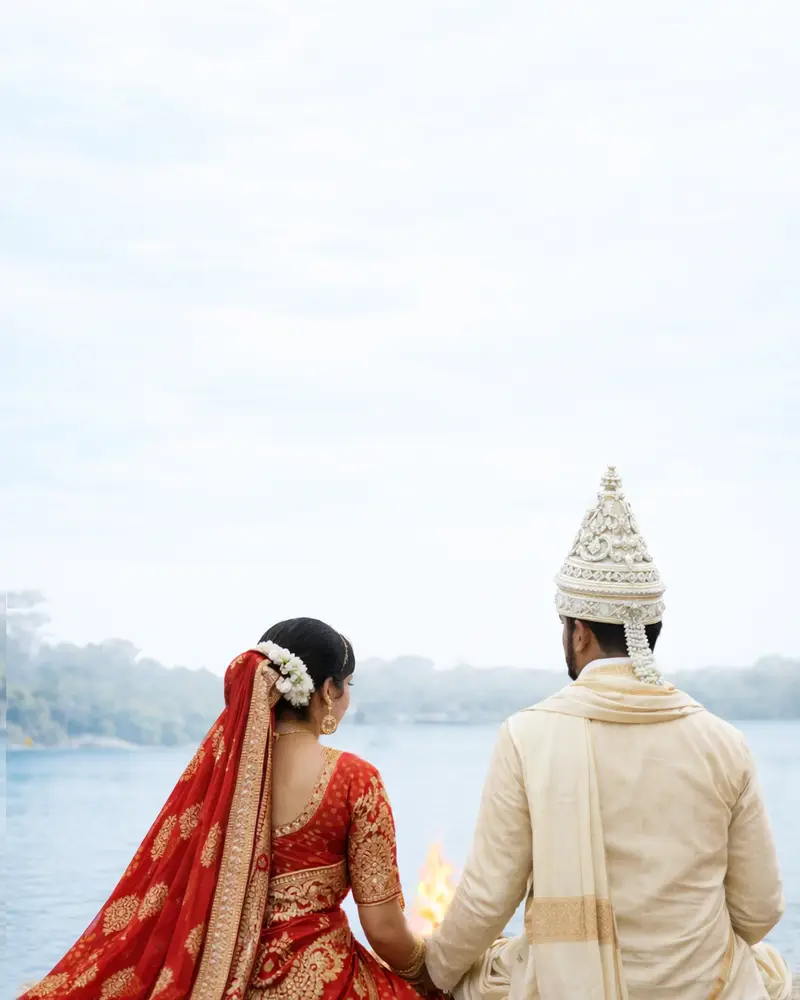
- Bahaghara ବାହାଘରThe sacred Odia Hindu wedding ceremony
- Bidaai ବିଦାଇThe bride's emotional farewell from her parental home
- Wedding Night & Days AfterGruhaprabesa ଗୃହପ୍ରବେଶThe bride's ceremonial entry into her new home
- Kaduri Khela କାଉଡ଼ି ଖେଳThe newlywed shell game for bonding
- Chauthi ଚଉଠୀThe fourth-day consummation ceremony with puja and saffron milk
- Post-WeddingAsta Mangala ଅଷ୍ଟମଙ୍ଗଳThe couple's eighth-day visit to the bride's parental home
- Bou Bhaat ବୋଉ ଭାତThe bride's first cooking and reception feast
Nirbandha ନିର୍ବନ୍ଧ
6+ Months Before
The formal engagement and commitment ceremony
Nirbandha, also called Lagna Dharaa, is the formal engagement ceremony in Odia Hindu weddings. Once the marriage alliance is fixed after horoscope matching, the fathers of the bride and groom make a sacred vow called Sankalpa by holding sacred articles — flowers, rice, and betel leaves — before a deity, pledging to unite their children in marriage.
This commitment, known as Vaak Nischaya (the binding of words), is made either at the bride's home or at a temple. It is accompanied by the exchange of elaborate gift trays between both families containing new clothes, sweets, fruits, and jewelry for the bride and groom.
Unlike some other traditions, the bride and groom may or may not be present at this ceremony — the emphasis is on the families' formal pledge to each other.
Why it matters
Nirbandha represents the sanctity of one's word in Odia culture. The Sankalpa vow, made before a deity, carries immense weight — it is considered a binding spiritual commitment that cannot be broken lightly. The exchange of gifts symbolizes mutual goodwill and the merging of two families into one.
In LaddoThis: a Nirbandha checklist with 10 tasks, 6 of them things to buy or prepare.
Jayee Anukulo ଜଈ ଅନୁକୂଳ
3-6 Months Before
Ceremonial invitation distribution beginning with Lord Jagannath
Jayee Anukulo marks the official announcement of the wedding and the beginning of wedding festivities. The process of invitation distribution in Odia weddings follows a deeply reverent three-stage protocol.
The very first wedding invitation card is presented at the Jagannath Temple in Puri (or the family's local temple) in a ritual called Deva Nimantrana — the divine invitation. This reflects the central role Lord Jagannath plays in Odia spiritual life, as the family seeks the Lord's blessing and symbolic attendance at the wedding.
The second invitation, called Moula Nimantrana, is delivered to the maternal uncle with betel nuts and areca leaves, honouring his special role in the family. The third stage, Jwain Nimantrana, involves the bride's father and male relatives visiting the groom's family with gifts to personally invite the groom — an all-male affair rooted in the mythology of Lord Shiva and Daksha's yajna.
Invitation cards are adorned with auspicious symbols such as swastikas, lotuses, or depictions of Lord Jagannath.
Why it matters
The Deva Nimantrana reflects the Odia belief that no auspicious event should begin without first seeking the blessings of Lord Jagannath. The structured invitation protocol honours the hierarchy of divine, maternal, and marital relationships. The Jwain Nimantrana being a male-only affair carries a mythological reference to Lord Shiva's exclusion from Daksha's yajna, symbolizing respect for the son-in-law.
In LaddoThis: a Jayee Anukulo checklist with 7 tasks, 3 of them things to buy or prepare.
Nandimukha ନାନ୍ଦୀମୁଖ
3-5 Days Before
Ancestral blessing ceremony invoking departed elders
Nandimukha is a solemn yet auspicious ceremony performed independently at both the bride's and groom's homes. The father or paternal guardian of each household performs prayers and offerings, invoking the blessings of departed ancestors upon the upcoming wedding.
Vedic mantras are chanted as incense fills the air, and offerings of fruits, sweets, and flowers are made before a sacred flame. The ritual calls upon generations of ancestors to witness and bless the union with joy — the name Nandimukha literally means 'happy face,' signifying that ancestors are invited to attend the wedding with joyful countenances.
This ceremony creates a spiritual bridge between the living and the departed, ensuring the family's complete blessings flow to the couple.
Why it matters
Odia Hindus believe that marriage is not merely a union of two individuals but of two entire lineages. By invoking ancestors, the family acknowledges that their blessings are essential for the success and longevity of the marriage. The ritual connects the couple to their heritage and the values passed down through generations.
In LaddoThis: a Nandimukha checklist with 6 tasks, 5 of them things to buy or prepare.
Diya Mangula Puja ଦିଅ ମାଙ୍ଗୁଳ ପୂଜା
3-5 Days Before
Blessing of bridal attire and jewelry at the temple
Diya Mangula Puja is a unique Odia pre-wedding ceremony where the bride's wedding attire and jewelry are taken to the local deity's shrine (Gramadevati) to receive divine blessings before the wedding day.
The barber's wife, known as the Nahuni, plays a ceremonial role — she presents the bride's saree, jewelry, bangles, toe rings, and a vermillion box to the Goddess, seeking blessings for the bride's long and happy married life. This ritual underscores the Odia tradition of involving community members in wedding celebrations.
The blessed items are then returned to the bride, now carrying the Goddess's auspicious energy, to be worn during the wedding ceremony.
Why it matters
By offering the bridal attire to the deity before the wedding, the family ensures that the bride enters her married life wrapped in divine blessings. The role of the Nahuni (barber's wife) reflects the community-oriented nature of Odia weddings, where different members of society contribute their services to make the celebration complete.
In LaddoThis: a Diya Mangula Puja checklist with 7 tasks, 5 of them things to buy or prepare.
Mangan ମାଙ୍ଗଣ
1 Day Before
The turmeric and ceremonial bathing ceremony
Mangan is the Odia equivalent of the Haldi ceremony, performed one day before the wedding, typically in the afternoon. It is a joyful purification ritual filled with laughter, blessings, and the golden glow of turmeric.
Seven married women — one of whom must be a sister-in-law of the bride or groom — apply a paste of freshly ground turmeric (haladi bata) mixed with mustard oil to the bride's and groom's hands, feet, and face. This is done at their respective homes separately.
Following the turmeric application, the bride undergoes a ceremonial bath known as Nua Dhowa, where she is bathed with seven kinds of holy water to ward off the evil eye. The groom receives his turmeric anointment from his sister-in-law. This ritual marks the formal beginning of wedding celebrations and is followed by feasting and singing.
Why it matters
Turmeric is revered in Odia culture for its purifying and beautifying properties. The application by seven married women transfers their blessings of marital happiness to the bride and groom. The number seven is sacred — representing the Saptapadi that the couple will soon take. The ceremonial bath with seven types of water purifies the bride spiritually, preparing her for the most important day of her life.
In LaddoThis: a Mangan checklist with 10 tasks, 8 of them things to buy or prepare.
Jairagodo Anukulo ଜୈରଗୋଡ଼ ଅନୁକୂଳ
1 Day Before
The sacred flame kindling ceremony
Jairagodo Anukulo is the ceremonial kindling of a sacred flame that will burn continuously throughout all the wedding ceremonies. A holy fire is lit using ghee or oil in a havan (fire pit), and the flame is carefully tended to ensure it never extinguishes until all rituals are complete.
Alongside the fire-lighting, uncooked pulses are ground with a mortar and pestle by the women of the household to prepare dal and pitha (traditional Odia rice cakes). This practical yet ritualistic act symbolizes the nourishment and sustenance that will flow in the new couple's life.
The continuous flame represents the unbroken spiritual energy that sanctifies every subsequent ceremony, connecting them in a single thread of divine blessing.
Why it matters
The unextinguished flame symbolizes the eternal nature of the marital bond — just as the fire burns continuously, so should the love and commitment between the couple. The grinding of pulses represents the household prosperity and domestic harmony that marriage brings. The ritual underscores the Odia belief in spiritual continuity across ceremonies.
In LaddoThis: a Jairagodo Anukulo checklist with 6 tasks, 5 of them things to buy or prepare.
Barjaatri ବରଯାତ୍ରୀ
Wedding Day
The groom's ceremonial procession and welcome
Barjaatri is the festive procession in which the groom, accompanied by his family members and friends, arrives at the wedding venue. The air fills with the sounds of shehnai, conch shells, and celebration as the groom makes his grand entrance.
Upon arrival, the bride's mother performs the ceremonial welcome. She greets the groom with aarti (waving a lit lamp) and applies a tikka of vermillion and unbroken rice to his forehead. The groom's feet are washed with tender coconut water — a sign of deep respect and hospitality. He is then offered Madhu-Parka, a sacred mixture of curd, honey, and ghee.
Simultaneously, the bride is informed of the groom's arrival and prepares for her own sacred bath, the Baadua Pani Gadhua, in which she purifies herself with holy water before the ceremonies begin.
Why it matters
The groom's procession represents his journey from one life stage to another. The foot-washing with coconut water symbolizes purity and respect, while the Madhu-Parka offering signifies that the groom is received as a divine guest (Atithi Devo Bhava). The bride's simultaneous purification bath creates a parallel spiritual preparation, ensuring both enter the ceremony in a state of sanctity.
In LaddoThis: a Barjaatri checklist with 8 tasks, 5 of them things to buy or prepare.
Bahaghara ବାହାଘର
The sacred Odia Hindu wedding ceremony
Bahaghara is the main wedding ceremony at the vivaha vedi (sacred wedding platform), unfolding through meaningful Vedic rituals.
It begins with Kanyadaan — the bride's father places her hand into the groom's, the most meritorious gift a father can make. In Hatha Granthi Fita, the priest ties the couple's hands with a mango leaf garland, binding them for the sacred fire rituals.
During Saptapadi, the couple takes seven rounds around the sacred fire. At each round, the bride breaks a rice mound with her right foot, symbolizing overcoming the seven challenges of married life. Each step is a vow — nourishment, strength, prosperity, happiness, progeny, longevity, and eternal companionship.
In Laja Homa, the bride's brother places puffed rice in her hands. The groom places his hands beneath, and together they pour it into the fire. In the playful Sala Bidha, the bride's brother punches the groom's back — a reminder of his duties.
The couple walks outside to view the Pole Star (Dhruva Tara), symbol of constancy. Upon returning, the groom applies sindoor to the bride's hair parting and places shankha bangles on her hands, completing the marriage.
Why it matters
The sacred fire (Agni) serves as the eternal witness to the couple's vows. The mango leaf garland in Hatha Granthi represents the evergreen nature of the marital bond. The rice mounds in Saptapadi symbolize life's challenges that the couple will overcome together. The viewing of the Pole Star is uniquely meaningful — just as Dhruva remains fixed and unwavering, so should the couple's devotion to each other. The bride is honored as Goddess Lakshmi herself, embodying prosperity and grace.
In LaddoThis: a Bahaghara checklist with 19 tasks, 11 of them things to buy or prepare.
Bidaai ବିଦାଇ
Wedding Day
The bride's emotional farewell from her parental home
After the ceremony and feast, the bride prepares to leave for the groom's home. This is one of the most emotionally charged moments of an Odia wedding.
Before the departure, the Bahuna ritual takes place — the bride's mother, grandmothers, and aunts sing deeply moving traditional songs called Bahuna Gita. These rhythmic songs recount the mother's pain of childbirth, the joy of nurturing her daughter, and the bittersweet anguish of sending her away. The songs acknowledge every sacrifice made and every tender moment shared.
Khai (puffed rice) is scattered on the path as the newlyweds depart, symbolizing prosperity and blessings. Both bride and groom seek blessings from all elders by touching their feet. The bride walks to the decorated car accompanied by the groom and a few escort relatives, leaving behind tears and carrying forward the love of her family.
Why it matters
The Bahuna songs are a profoundly unique element of Odia weddings — they transform the farewell into an acknowledgment of a mother's lifetime of sacrifice. The scattering of khai on the path blesses the couple's journey with abundance. Bidaai represents the pivotal moment of transition from daughter to wife, from one home to another.
In LaddoThis: a Bidaai checklist with 5 tasks, 2 of them things to buy or prepare.
Gruhaprabesa ଗୃହପ୍ରବେଶ
Wedding Night & Days After
The bride's ceremonial entry into her new home
Gruhaprabesa is the ceremonial welcome of the newly married bride into the groom's home. The mother-in-law and female relatives of the groom's family receive the couple with conch shell blowing, ululation (hulu-huli), and aarti.
At the threshold, a pot of rice is placed. The bride kicks it over with her right foot, sending the grains scattering into the home — symbolizing that she enters as an incarnation of Goddess Lakshmi, bringing happiness, prosperity, and abundance to the household.
The bride's feet may be adorned with alta (red lac dye), and she steps into her new home for the first time. The family gathers for a festive dinner to celebrate the arrival of their new daughter-in-law.
Why it matters
The overturning of the rice pot is rich in symbolism — rice represents sustenance and prosperity in Odia culture, and the bride's act of spilling it into the home declares her role as the bringer of abundance. The hulu-huli (ululation) is a sound of celebration unique to Odia and eastern Indian traditions, marking auspicious moments.
In LaddoThis: a Gruhaprabesa checklist with 6 tasks, 4 of them things to buy or prepare.
Kaduri Khela କାଉଡ଼ି ଖେଳ
Wedding Night & Days After
The newlywed shell game for bonding
Kaduri Khela is a charming post-wedding game played between the newlywed couple in a private room. Small, white, glittering kaduri shells — believed to bring wealth, harmony, and prosperity — are used in a playful competition.
In the first round, the groom holds the shells tightly in his closed fist while the bride uses both her hands to try to pry them open. In the next round, the roles reverse — the bride clenches the shells while the groom must use only one hand to retrieve them. A family elder judges who wins each round.
The game is lighthearted and intimate, designed to help the newlyweds relax, laugh, and begin building their bond after the intensity of the wedding ceremonies.
Why it matters
The kaduri shells are symbols of Goddess Lakshmi and are believed to attract wealth and prosperity. The playful competition establishes a dynamic of give-and-take between the couple. The asymmetry of the rules (bride uses two hands, groom uses one) reflects the Odia cultural value of chivalry and gentleness toward the bride.
In LaddoThis: a Kaduri Khela checklist with 3 tasks, 2 of them things to buy or prepare.
Chauthi ଚଉଠୀ
Wedding Night & Days After
The fourth-day consummation ceremony with puja and saffron milk
Chauthi takes place on the fourth day after the wedding. It is one of the most intimate and sacred post-wedding rituals in Odia tradition, and the night is called Basara Rati (the bridal night).
During the day, a puja and homa are performed by the priest. A coconut is roasted inside the sacred fire, and the resulting charu (roasted coconut flesh) is given to the couple to consume — symbolizing the fire's blessings entering their bodies.
The bridal chamber is lavishly decorated with Rajanigandha (tuberose) and other fragrant flowers. The bride lights a Basara Dipa — a lamp placed alongside the bed — symbolizing a long-lasting, glowing relationship. In the night, the bride carries Kesara Dudha (saffron-infused milk) to the groom.
This ceremony is considered essential — traditionally, the marriage is not considered fully valid until consummation on this sacred night.
Why it matters
The Chauthi ceremony honors physical intimacy as a blessed and sacred aspect of married life. The four-day waiting period allows the bride to adjust emotionally to her new surroundings. The Basara Dipa represents the eternal light of the relationship. The saffron milk is believed to be an auspicious offering of nourishment and warmth.
In LaddoThis: a Chauthi checklist with 7 tasks, 5 of them things to buy or prepare.
Asta Mangala ଅଷ୍ଟମଙ୍ଗଳ
Post-Wedding
The couple's eighth-day visit to the bride's parental home
Asta Mangala takes place on the eighth day after the wedding, when the bride and groom are invited to the bride's parental home for a joyous reunion. This marks the formal conclusion of all Odia wedding rituals.
The couple is welcomed with the blowing of conch shells (Shankha) and the distinctive hulu-huli ululation. A grand traditional Odia feast is prepared, featuring the bride's favourite dishes. The bride receives new sarees and jewelry from her parents, and the groom is also presented with gifts.
The couple stays overnight — their first night together at the bride's parental home as a married couple. The next morning, they return to the groom's home, and with this, the complete wedding cycle comes to a close.
Why it matters
Asta Mangala reassures the bride that marriage does not sever the bond with her natal home. The eighth-day visit creates a bridge between the bride's two worlds — her parental home and her marital home. The overnight stay together at her parents' home is a statement that the groom is now welcomed as a son of the house. This ceremony formally marks the end of all Odia wedding rites.
In LaddoThis: a Asta Mangala checklist with 5 tasks, 3 of them things to buy or prepare.
Bou Bhaat ବୋଉ ଭାତ
Post-Wedding
The bride's first cooking and reception feast
Bou Bhaat is a significant post-wedding ritual where the bride cooks her first meal in her new home, symbolizing her full acceptance into the groom's household. She prepares a traditional dish — typically rice with ghee and dal — and serves every family member, starting with the elders.
This humble act of cooking and serving carries enormous symbolic weight in Odia culture, where rice (bhaat) is the foundation of every meal and the sustainer of life. By feeding her new family, the bride declares herself the nurturer and provider of the household.
In modern celebrations, the cooking ceremony is often followed by a grand reception feast where the groom's extended social circle and friends are invited. The couple sits on a decorated stage, receiving blessings and gifts from guests. An elaborate spread of Odia cuisine is served — Dalma, Besara, multiple fish preparations, and the beloved Rasagolla and Chhena Poda.
Why it matters
Rice holds an almost sacred place in Odia culture — it is the soul of Odia cuisine. By cooking and serving bhaat to the household, the bride performs the most fundamental act of domestic life, establishing herself as the heart of the home. The reception introduces the bride to the groom's wider community.
In LaddoThis: a Bou Bhaat checklist with 12 tasks, 6 of them things to buy or prepare.