 LaddoThis
Sindhi Hindu wedding ceremonies, in order
A Sindhi Hindu wedding usually moves through 18 ceremonies: Kachhi Misri, Pakki Misri, Berana Satsang, Tih, Dev Bithana, Lada, Sagri / Mehndi, Saanth & Tel, Jenya / Upanayana, Ghari Pooja & Navgrahi Pooja, Swagat & Baraat, Hathialo & Palli Pallo, Kanyadaan & Phere, Vidaai, Datar & Salt Shagun, Chhanar, Satawarah and Reception. Below is each one in order, when it usually happens and what it means. Customs vary between families and regions, so treat this as the common sequence, not a rule.
18 ceremonies140 checklist tasks in the app
At a glance
- 3-4 Months BeforeKachhi Misri कच्ची मिसरीThe informal engagement where families exchange misri to confirm the match
- 1-2 Months BeforePakki Misri पक्की मिसरीThe formal engagement ceremony with ring exchange and lavish gift hampers
- 2 Weeks BeforeBerana Satsang बेराणा सत्संगA prayer gathering invoking Jhulelal's blessings for the wedding ceremonies
- 5-7 Days BeforeTih तिहThe bride's priest delivers the wedding date and sacred items to the groom's home
- Dev Bithana देव बिठानाInstallation of the sacred stone grinder as Ganesha at both homes
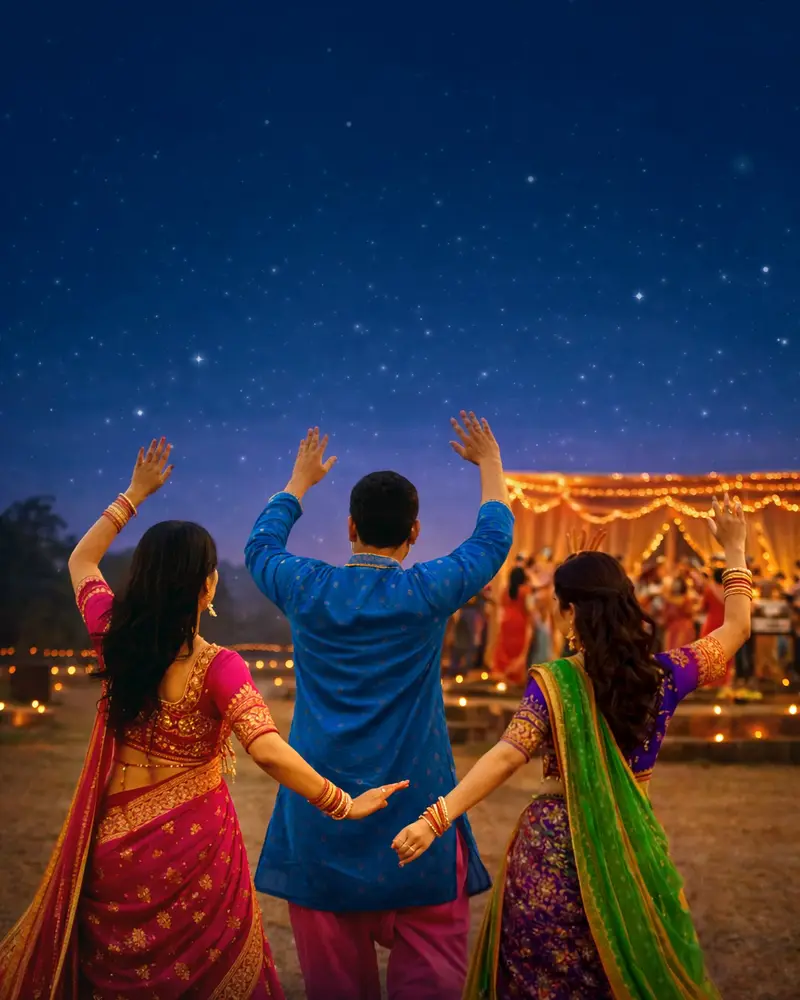
- Lada लाडाA festive evening of traditional Sindhi folk songs and dancing
- Sagri / Mehndi सगरी / मेहंदीHenna applied on the bride while families are formally introduced
- 1-2 Days BeforeSaanth & Tel सांठ और तेलThe oil anointing and turmeric ceremony with the earthen lamp ritual
- Jenya / Upanayana जेन्या / उपनयनThe sacred thread ceremony marking the groom's transition to manhood
- Wedding MorningGhari Pooja & Navgrahi Pooja घारी पूजाWheat grinding for prosperity and nine-planet worship on the wedding morning
- Swagat & Baraat स्वागत और बारातThe groom's procession arrives and is welcomed with aarti and sweets
- Wedding CeremonyHathialo & Palli Pallo हथियालोThe couple's hands are bound and their dupattas are knotted together
- Kanyadaan & Phere कन्यादान और फेरेThe sacred wedding ceremony with the giving away of the bride and fire vows
- Departure & WelcomeVidaai विदाईThe emotional bridal farewell as she departs for her new home
- Datar & Salt Shagun दातर और नमक शगुनThe bride is warmly received at her new home with foot-washing and salt exchange
- Post-WeddingChhanar छानरThe post-wedding puja where the stone grinder is removed and the couple is fed
- Satawarah सतावराThe bride's first return to her parents' home as a married woman
- Reception रिसेप्शनA grand celebration hosted by the groom's family with Sindhi cuisine and dancing
Kachhi Misri कच्ची मिसरी
3-4 Months Before
The informal engagement where families exchange misri to confirm the match
Kachhi Misri is the first formal meeting between the two families after the match has been finalized, much like the North Indian Roka ceremony. The word 'Kachhi' means temporary or informal, signifying that this is the preliminary engagement before the formal Pakki Misri.
The bride's family gifts sweets, clothes, coconut, fruits, and lumps of misri (rock sugar crystals) to solemnize the match. The bride's mother prepares the auspicious Kada Prasad and sends it to the groom's family in a silver dish.
Both families are given coconuts and misri, signifying mutual acceptance. The groom's sisters drape a red dupatta over the bride's head and lovingly feed her sweet wheat halva, welcoming her into the family.
This intimate gathering is typically attended by 15-25 close family members, creating a warm and personal atmosphere for the two families to begin bonding.
Why it matters
The exchange of misri (sugar crystals) symbolizes the sweetness of the upcoming union and the hope that the couple's life together will be sweet. The coconut is considered one of the most auspicious offerings in Hindu tradition, representing prosperity and fertility. The red dupatta draped by the groom's sisters marks the bride's symbolic acceptance into her future family. The Kada Prasad sent by the bride's mother is a sacred offering that carries the mother's blessings.
In LaddoThis: a Kachhi Misri checklist with 7 tasks, 7 of them things to buy or prepare.
Pakki Misri पक्की मिसरी
1-2 Months Before
The formal engagement ceremony with ring exchange and lavish gift hampers
Pakki Misri is the formal engagement ceremony in a Sindhi Hindu wedding, typically held about a week before the wedding day. While Kachhi Misri was the informal commitment, Pakki Misri makes the union official and public.
The groom's family arrives with beautifully decorated hampers containing expensive clothes such as a saree or lehenga, jewelry, cosmetics, sweets, and fruits, which are placed in the bride's lap by the groom's sister and sister-in-law. The groom's mother presents an earthen pot filled with Misri to the bride's mother, who opens it in front of everyone.
Seven married women draw an image of Lord Ganesha on the earthen pot, invoking his blessings for the auspicious occasion. The couple exchanges rings in front of family and friends. The priest consults the couple's horoscopes and announces the exact auspicious time (muhurat) for the wedding ceremony.
The bride's family reciprocates with gifts and shagun for the groom, and the event concludes with a festive meal.
Why it matters
Pakki means permanent — this ceremony transforms the informal engagement into a binding commitment. The earthen pot filled with Misri symbolizes sweetness and abundance. Lord Ganesha drawn on the pot by seven married women channels their blessings of happy married life onto the couple. The number seven is considered sacred, representing the seven vows of marriage. The priest's announcement of the wedding muhurat adds divine sanction to the union.
In LaddoThis: a Pakki Misri checklist with 10 tasks, 7 of them things to buy or prepare.
Berana Satsang बेराणा सत्संग
2 Weeks Before
A prayer gathering invoking Jhulelal's blessings for the wedding ceremonies
Berana Satsang is a deeply spiritual ceremony unique to Sindhi Hindu weddings. It is a prayer gathering held in the name of Jhulelal, the patron deity of the Sindhi community and a manifestation of Varun Devta (the water god). This ceremony traditionally takes place about ten days before the wedding and marks the official beginning of the wedding festivities.
The groom's family organizes the satsang, inviting family, friends, and community members to pray for the couple's happiness and for the smooth conduct of all upcoming ceremonies. A beautifully adorned image or murti of Jhulelal is the focal point of the gathering.
Women sing Sindhi ladas (traditional folk wedding songs) accompanied by the rhythmic beat of dholaks and thalis (metal plates). Devotional Jhulelal songs fill the air, creating a deeply spiritual and festive atmosphere. The satsang concludes with aarti and the distribution of prasad.
The gathering brings together the community in a spirit of devotion and celebration, setting a sacred tone for all the ceremonies that follow.
Why it matters
Jhulelal holds a special place in Sindhi Hindu culture as the community's patron saint and divine protector. Invoking his blessings at the start of the wedding festivities is believed to ensure that every ceremony proceeds without obstacles. The Berana Satsang reinforces the community's spiritual identity and reminds the families that the wedding is not merely a social event but a sacred union blessed by divine grace. The singing of ladas connects the present celebration to generations of Sindhi tradition.
In LaddoThis: a Berana Satsang checklist with 8 tasks, 5 of them things to buy or prepare.
Tih तिह
5-7 Days Before
The bride's priest delivers the wedding date and sacred items to the groom's home
Tih is a charming and auspicious Sindhi ceremony in which the priest from the bride's family formally visits the groom's home to deliver the wedding date and sacred items. This ritual officially communicates the lagna — the precise auspicious time determined by the priest based on the couple's horoscopes.
The priest carries a cloth bag filled with rice, sugar, spices (cloves and cardamom), a coconut, exactly twenty-one sweets, nine dates, and a green-colored ball of silk yarn. Most importantly, he carries a piece of paper on which the wedding lagna (the exact auspicious time) is written.
At the groom's home, the priest conducts a Ganesh Puja using the samagri he has brought. He then ceremoniously places the lagna paper on the groom's lap, formally conveying the wedding date and time from the bride's family to the groom's family.
The specific quantities — twenty-one sweets and nine dates — carry numerological significance in Sindhi tradition, as odd numbers are considered especially auspicious.
Why it matters
The Tih ceremony bridges the two families through the authority of the priest, who serves as a sacred messenger. The lagna paper represents divine timing — the wedding will take place at a moment deemed most auspicious by the stars. The green silk yarn symbolizes fertility and new beginnings. The rice represents abundance, the sugar and spices symbolize a flavorful married life, and the coconut is the most sacred offering in Hindu rituals. The priest's journey from the bride's home to the groom's physically connects the two households.
In LaddoThis: a Tih checklist with 8 tasks, 7 of them things to buy or prepare.
Dev Bithana देव बिठाना
5-7 Days Before
Installation of the sacred stone grinder as Ganesha at both homes
Dev Bithana, also known as Ganesh Sthapana, is a sacred Sindhi ritual that formally marks the beginning of wedding festivities at both the bride's and groom's homes. A stone grinder (sil-batta) is reverently installed as a representation of Lord Ganesha by the priest.
The ceremony typically takes place five days before the wedding. The priest performs an elaborate puja, invoking Lord Ganesha's presence into the stone grinder. Diyas are lit, incense is offered, and Vedic mantras are chanted to sanctify the installation.
Once the Dev Bithana is performed, a critical restriction comes into effect — neither the bride nor the groom is permitted to leave their respective homes until the wedding day. This period of seclusion is believed to protect them from negative energies and ensure their spiritual purity for the wedding.
The stone grinder remains installed throughout the wedding period and is ceremonially removed after the wedding in the Chhanar ritual.
Why it matters
Lord Ganesha is the remover of obstacles and is invoked at the beginning of every auspicious event in Hindu tradition. The stone grinder as Ganesha's representation is unique to Sindhi culture and reflects the community's agrarian roots — the sil-batta was once essential in every Sindhi household. The bride and groom's confinement after Dev Bithana serves as a period of spiritual preparation and protection, ensuring they enter wedlock free from any negative influences.
In LaddoThis: a Dev Bithana checklist with 5 tasks, 4 of them things to buy or prepare.
Lada लाडा
5-7 Days Before
A festive evening of traditional Sindhi folk songs and dancing
Lada is the Sindhi equivalent of a Sangeet — a lively and joyous celebration of traditional folk wedding songs and dance. Hosted by the groom's family, it brings together women from the neighbourhood and extended family for an evening of music, merriment, and cultural celebration.
The heart of the Lada is the singing of traditional Sindhi folk wedding songs, also called ladas. Women gather in circles, singing these songs that have been passed down through generations, often teasing the bride, groom, and their respective families with witty, humorous verses. The dholak provides the rhythmic heartbeat, while thalis (metal plates) are beaten as percussion accompaniment.
Dancing is spontaneous and exuberant — women perform traditional steps, and the celebration often continues late into the night. In modern Sindhi weddings, a DJ and choreographed performances are sometimes added alongside the traditional singing.
The Lada is one of the most anticipated events, combining cultural heritage with unrestrained joy and celebration.
Why it matters
The Lada preserves Sindhi oral tradition — the folk songs carry centuries of cultural wisdom, humour, and shared experience. Each song marks a different aspect of married life, from the bride's nervousness to the mother-in-law's expectations. The communal singing reinforces the community bond and ensures that younger generations learn these traditional songs. The dholak and thali accompaniment is uniquely Sindhi, creating a rhythmic soundscape that connects the celebration to its cultural roots.
In LaddoThis: a Lada checklist with 8 tasks, 3 of them things to buy or prepare.
Sagri / Mehndi सगरी / मेहंदी
5-7 Days Before
Henna applied on the bride while families are formally introduced
Sagri, combined with Mehndi, serves a dual purpose in Sindhi weddings — it is both the formal introduction between the bride's and groom's families and the beloved henna application ceremony. The Sagri aspect brings both families together for the first time in a relaxed, celebratory setting.
The bride sits in a beautifully decorated area as a professional mehndi artist creates elaborate henna designs on her hands, feet, and arms. The intricate patterns can take 4-6 hours to complete, and often feature the groom's name hidden within the design. Meanwhile, guests mingle, sing, and have simpler mehndi designs applied to their own hands.
The groom also gets mehndi on his palms, typically a simpler design. Family members from both sides are introduced to each other, creating bonds that will deepen through the wedding celebrations.
Once the bride's mehndi is complete, a lemon-sugar solution is applied to deepen the colour, and her hands are wrapped in cotton overnight for the richest stain. In Sindhi tradition, the darker the mehndi, the deeper the love between the couple.
Why it matters
Mehndi is believed to bring good fortune and is one of the sixteen adornments (solah shringar) of a Hindu bride. In Sindhi culture, the mehndi ceremony also serves as the icebreaker between the two families — the Sagri component ensures that introductions happen in a festive, relaxed atmosphere rather than at the more formal wedding ceremony. The hidden groom's name in the bridal mehndi is a beloved tradition — on the wedding night, the groom must find his name within the intricate patterns.
In LaddoThis: a Sagri / Mehndi checklist with 9 tasks, 5 of them things to buy or prepare.
Saanth & Tel सांठ और तेल
1-2 Days Before
The oil anointing and turmeric ceremony with the earthen lamp ritual
Saanth and Tel (also known as Head Bukki) is the Sindhi equivalent of the Haldi ceremony, combining oil anointing with joyous rituals. It takes place at both the bride's and groom's homes separately on the eve of the wedding.
Seven married women (suhagans) pour mustard oil over the head of the bride or groom, blessing them for a happy married life. Turmeric paste is applied to the face and body. After the oil anointing, the bride or groom is given a new shoe to wear on their right foot and must try to break an earthen lamp by stomping on it — if they succeed on the first try, it is considered a very good omen.
The Bukki ritual follows: thread is tied to a large earthen pot called an ukhri, and dried dates are crushed into it while women sing traditional folk songs. This is accompanied by much laughter and celebration.
For the groom, the Saanth has a unique twist — after the oil is poured and the earthen lamp is broken, his close friends and family members ceremonially tear off his clothes, symbolizing the shedding of his bachelor life as he prepares for marriage.
The ceremony concludes with a cleansing bath to wash away the oil and turmeric.
Why it matters
The oil anointing by seven married women channels their blessings of marital bliss onto the bride or groom. The number seven is sacred in Hindu tradition, representing the seven vows of marriage. The earthen lamp breaking is a test of strength and resolve — a good omen for the challenges of married life. The tearing of the groom's clothes is a dramatic and symbolic farewell to bachelorhood. The turmeric is believed to purify the body and bring a golden glow before the wedding. The Bukki ritual with dates being crushed in the ukhri represents sweetness and prosperity.
In LaddoThis: a Saanth & Tel checklist with 9 tasks, 9 of them things to buy or prepare.
Jenya / Upanayana जेन्या / उपनयन
1-2 Days Before
The sacred thread ceremony marking the groom's transition to manhood
Jenya, also called Upanayana, is a sacred ritual performed at the groom's house that celebrates the groom's transition from boyhood to manhood. This ceremony is considered essential in Sindhi Hindu tradition — without it, the wedding is considered incomplete.
The priest performs an elaborate yajna (fire ritual) with Vedic mantras. A sanctified thread called the Janeu is offered to the groom, who wears it across his body from the left shoulder to the right hip. The Janeu is a mark of spiritual maturity and the beginning of the groom's role as a householder.
During the ceremony, the priest whispers a sacred prayer (the Gayatri Mantra) into the groom's ear, which the groom is expected to chant daily from that point forward. This whispered transmission symbolizes the passing of spiritual knowledge from teacher to student.
The groom is dressed in a new dhoti and angvastra (upper cloth), symbolizing his new identity as a spiritually initiated man ready for the responsibilities of marriage and family life.
Why it matters
The Jenya is one of the most important sanskaras (sacraments) in Hindu tradition. The sacred thread represents the three debts a Hindu man must repay: to the gods (through worship), to the sages (through study), and to the ancestors (through progeny). In Sindhi tradition, if the ceremony could not take place earlier in life, it must be performed before the wedding. The whispered Gayatri Mantra is the most sacred verse in Hindu scripture, and receiving it marks a spiritual awakening.
In LaddoThis: a Jenya / Upanayana checklist with 6 tasks, 5 of them things to buy or prepare.
Ghari Pooja & Navgrahi Pooja घारी पूजा
Wedding Morning
Wheat grinding for prosperity and nine-planet worship on the wedding morning
Ghari Pooja and Navgrahi Pooja are performed on the morning of the wedding day at both the bride's and groom's homes. These ceremonies prepare the spiritual ground for the wedding.
In Ghari Pooja, the priest hands a quantity of wheat to the bride or groom, who passes it to seven married women. These women grind the wheat into flour using a stone grinder, symbolizing the flourishing prosperity of the new household. Traditional songs are sung during the grinding. The ceremony concludes with the bride or groom smashing an earthen lamp with their foot, signifying the destruction of obstacles.
Navgrahi Pooja follows, where the priest offers worship to the nine celestial planets (Navagrahas) along with major Hindu deities including Ganesha, Lakshmi, Shiva, and Narayan. Light, water, and food are offered to welcome the gods as guests in both homes.
These morning rituals ensure that all celestial bodies are aligned in favour of the couple and that any astrological obstacles are removed before the wedding begins.
Why it matters
The grinding of wheat by married women symbolizes the transformation of raw grain into nourishing flour — a metaphor for the bride and groom's journey from single individuals to partners who will build a prosperous household together. The Navgrahi Pooja appeases the nine planets, which in Hindu astrology govern every aspect of human life. By worshipping them on the wedding morning, the families seek to neutralize any adverse planetary influences and ensure cosmic harmony for the marriage.
In LaddoThis: a Ghari Pooja & Navgrahi Pooja checklist with 8 tasks, 7 of them things to buy or prepare.
Swagat & Baraat स्वागत और बारात
Wedding Morning
The groom's procession arrives and is welcomed with aarti and sweets
The Swagat marks the arrival of the groom's baraat (wedding procession) at the wedding venue. The groom arrives in a grand procession accompanied by dhol players, a DJ, and his dancing family and friends.
At the entrance of the venue, the groom must break an earthen lamp with his foot before stepping inside — a ritual believed to destroy all evil energies. The bride's family welcomes the baraatis at the gate, sprinkling rosewater on them and offering sugar and cardamom as a sweet welcome.
The bride then performs a traditional aarti for the groom, circling the thali with a lit diya around him. She applies a tilak on his forehead and, in a playful Sindhi tradition, pulls the groom's nose gently — a lighthearted moment that draws laughter from the gathered families.
The bride's family escorts the groom and his party inside for refreshments before the main ceremony begins.
Why it matters
The groom breaking the earthen lamp at the entrance symbolizes the destruction of all obstacles and negative energies before he enters the sacred space of the wedding. The aarti by the bride is her first sacred act as his partner, welcoming him with light and prayer. The nose-pulling is a uniquely Sindhi tradition that lightens the mood and establishes the playful dynamic between the couple. Sugar and cardamom symbolize the sweetness and fragrance the groom's family brings to the union.
In LaddoThis: a Swagat & Baraat checklist with 12 tasks, 9 of them things to buy or prepare.
Hathialo & Palli Pallo हथियालो
Wedding Ceremony
The couple's hands are bound and their dupattas are knotted together
Hathialo and Palli Pallo are two of the most intimate and symbolic rituals performed during the Sindhi Hindu wedding ceremony under the mandap.
In Hathialo, the right hands of the bride and groom are tied together using a red cloth. With their hands bound, the couple prays to the gods for a blessed union. This physical binding symbolizes their commitment to walk through life hand in hand, supporting each other through every challenge.
Palli Pallo follows, where the groom's sister ties the bride's dupatta to the groom's dupatta, creating two knots. Within these knots, she places a few grains of rice. This knotting physically connects the couple, symbolizing that they are now inseparably joined. The rice within the knots represents fertility and abundance.
These rituals precede the Phere, creating a sacred sequence where the couple is first joined by hand, then by garment, and finally by vow.
Why it matters
Hathialo represents the most fundamental promise of marriage — to hold each other's hand through life. The red cloth symbolizes love, passion, and the auspicious nature of the bond. Palli Pallo, performed by the groom's sister, honours the sibling relationship and her role in welcoming the bride into the family. The rice in the knots carries the prayer for fertility and a home that never lacks abundance. Together, these rituals create a layered symbolism of physical, familial, and spiritual union.
In LaddoThis: a Hathialo & Palli Pallo checklist with 4 tasks, 3 of them things to buy or prepare.
Kanyadaan & Phere कन्यादान और फेरे
Wedding Ceremony
The sacred wedding ceremony with the giving away of the bride and fire vows
Kanyadaan and the Phere form the spiritual heart of the Sindhi Hindu wedding, performed under the mandap with the sacred fire as divine witness.
The ceremony begins with Jai Mala — the couple exchanges heavy floral garlands while friends playfully interfere, drawing cheers and laughter.
In Kanyadaan, the bride's father places her hand in the groom's and pours holy water over their joined hands, requesting him to love and care for his daughter. This is considered the greatest gift (daan) a father can bestow.
The Phere follow — four rounds around the sacred fire with Vedic mantras. The bride leads the first three rounds, the groom leads the fourth. Each phera represents nourishment, strength, prosperity, and eternal companionship.
In a uniquely Sindhi variation, the bride steps over seven small piles of rice symbolizing life's hardships, with the groom holding her hand throughout.
Sindoor Daan follows — the groom fills the parting of the bride's hair with sindoor and ties the mangalsutra with three knots. Conch shells are blown and the couple is showered with flower petals.
Why it matters
The sacred fire (Agni) is the divine witness — no Hindu marriage is complete without it. Kanyadaan is considered the highest form of charity in Hindu tradition. The four Phere in Sindhi tradition (as opposed to seven in some other communities) each carry specific vows that form the foundation of married life. The bride leading three rounds signifies her role as the spiritual guide of the household. The groom's fourth round represents his pledge to protect and provide. The Saptapadi over rice piles is uniquely Sindhi and emphasizes the couple's commitment to face life's challenges together. The sindoor and mangalsutra are the most sacred symbols of a married Hindu woman.
In LaddoThis: a Kanyadaan & Phere checklist with 13 tasks, 10 of them things to buy or prepare.
Vidaai विदाई
Departure & Welcome
The emotional bridal farewell as she departs for her new home
Vidaai is the most emotionally intense moment of the entire Sindhi wedding. It marks the bride's departure from her parents' home and family, a transition that carries deep emotional weight in Indian culture.
The bride's father gives her parting gifts and his blessings. The bride throws handfuls of rice backward over her head — symbolizing her prayer that her parents' home will always remain prosperous even after she leaves. Her brothers escort her to the decorated car amid tears and blessings.
The groom's mother or sister places a red dupatta over the bride's head, symbolically welcoming her into the groom's family. The couple enters the decorated car as family members gather for a final farewell.
The departure is accompanied by tears from both families, but also by the hope and joy that comes with the beginning of a new chapter. The car is often decorated with flowers and a 'Just Married' banner.
Why it matters
Vidaai represents the bride's transition from daughter to wife — one of the most profound moments in Hindu culture. The rice thrown backward is a prayer of gratitude to her parents and a blessing for their continued prosperity. The brothers escorting the bride symbolize their protective role one final time. The red dupatta from the groom's family marks her formal acceptance into her new household.
In LaddoThis: a Vidaai checklist with 6 tasks, 4 of them things to buy or prepare.
Datar & Salt Shagun दातर और नमक शगुन
Departure & Welcome
The bride is warmly received at her new home with foot-washing and salt exchange
Datar and Salt Shagun mark the bride's ceremonial first entry into the groom's home, welcoming her as the embodiment of Goddess Lakshmi.
In the Datar ceremony, the groom's mother performs aarti at the entrance. The bride's feet are washed with water and milk — a mark of the highest respect. She is then escorted inside.
The Salt Shagun follows: the bride passes a handful of salt to her husband, who passes it back without spilling a grain. This exchange is performed three times, symbolizing the couple's ability to handle responsibilities with care.
The family gathers for Mooh Dikhai — each member gazes upon the bride's face and blesses her with gifts of jewelry, cash, or clothing. The bride visits the family puja room and lights a lamp, paying respects to the household deities.
The evening concludes with the couple sharing a glass of sweetened milk, symbolizing the sweetness of their new life together.
Why it matters
Washing the bride's feet with milk and water is an act of the highest honour in Hindu tradition — she is welcomed not as a newcomer but as a goddess bringing fortune. The Salt Shagun is uniquely Sindhi — salt is essential to sustenance, and passing it without spillage demonstrates mutual trust and careful partnership. The three exchanges represent past, present, and future. Mooh Dikhai creates personal bonds between the bride and each family member. Lighting the lamp in the puja room integrates the bride into the spiritual life of her new home.
In LaddoThis: a Datar & Salt Shagun checklist with 7 tasks, 6 of them things to buy or prepare.
Chhanar छानर
Post-Wedding
The post-wedding puja where the stone grinder is removed and the couple is fed
Chhanar is performed the day after the wedding and brings closure to the sacred rituals that began with Dev Bithana. The same priest who installed the stone grinder idol before the wedding returns to perform this concluding ceremony.
The priest conducts a puja and ceremonially removes the stone grinder that had been installed as Lord Ganesha's representation at the beginning of the wedding festivities. This removal signifies that the wedding ceremonies are now complete and that Lord Ganesha's protective presence is no longer needed in this specific form.
After the puja, the groom's mother lovingly feeds the newlywed couple seven mouthfuls of milk, rice, and sugar. Each mouthful is offered with blessings and prayers for the couple's happy life together. This maternal feeding is a tender gesture that formally welcomes the bride as a daughter and celebrates the couple's first full day as husband and wife.
The ceremony is intimate, attended only by close family members, creating a peaceful conclusion to the grand wedding celebrations.
Why it matters
The removal of the stone grinder completes the cycle that began with Dev Bithana, symbolizing that the divine protection invoked for the wedding period has fulfilled its purpose. The seven mouthfuls of milk, rice, and sugar from the groom's mother represent the mother-in-law's seven blessings for the couple. This feeding ritual establishes the mother-in-law's nurturing role and formally integrates the bride into the family's daily life. The intimacy of Chhanar contrasts with the grandeur of the wedding, bringing the family together in quiet gratitude.
In LaddoThis: a Chhanar checklist with 4 tasks, 3 of them things to buy or prepare.
Satawarah सतावरा
Post-Wedding
The bride's first return to her parents' home as a married woman
Satawarah is the Sindhi tradition of the bride's first return to her parents' home after the wedding. The priest determines the auspicious time for this visit, and the couple travels together to the bride's parental home.
The bride's family receives the couple with a lavish welcome, treating them to a grand feast and showering them with gifts. This homecoming is deeply emotional for the bride — it is her first visit home as a married woman, and the reunion with her parents and siblings is filled with tears of joy.
The bride's family presents the groom with a new outfit, and the bride receives jewelry, clothing, or other gifts. Cash shagun and sweets are given to the couple. The groom reciprocates by bringing mithai and a thoughtful gift for the bride's parents.
The visit reassures the bride that marriage has not severed her bond with her birth family. It demonstrates the continuing love and support of her parents and establishes the groom's relationship with his in-laws as one of respect and warmth.
Why it matters
Satawarah reinforces the Sindhi belief that a daughter never truly leaves her parents' home — she gains a new family without losing her original one. The priest choosing the auspicious time ensures that this emotionally significant visit begins on a spiritually favourable note. The lavish welcome and gifts demonstrate the bride's family's enduring love. The groom's respectful conduct and gifts establish his character in the eyes of his in-laws.
In LaddoThis: a Satawarah checklist with 6 tasks, 5 of them things to buy or prepare.
Reception रिसेप्शन
Post-Wedding
A grand celebration hosted by the groom's family with Sindhi cuisine and dancing
The Reception, known in Sindhi tradition as the Gadjani, is a grand celebration hosted by the groom's family to publicly celebrate the wedding. It is typically the largest event, inviting the wider community — colleagues, friends, and extended family who may not have attended the wedding itself.
The couple sits on an elaborately decorated stage as a steady stream of guests approaches to bless them, present gifts, and take photographs. The backdrop is typically a stunning floral arrangement with the couple's names.
A lavish dinner features the finest Sindhi cuisine — dal pakwan, sai bhaji, Sindhi biryani, papad, and an array of desserts. Cake-cutting marks the transition from formalities to festivities.
The first dance by the couple opens the floor, followed by energetic dancing that lasts late into the night. The DJ plays a mix of Sindhi, Bollywood, and contemporary music. The celebration is full of singing, dancing, and drinking — a fitting finale to the wedding festivities.
Why it matters
The Gadjani extends the wedding celebration to the broader community, reflecting the Sindhi value that a wedding belongs to everyone. The groom's family hosting demonstrates their pride and generosity. Traditional Sindhi cuisine connects the celebration to cultural identity — dal pakwan in particular is the quintessential Sindhi dish served at every important occasion. The stage blessings create personal moments between the couple and each guest.
In LaddoThis: a Reception checklist with 10 tasks, 4 of them things to buy or prepare.