 LaddoThis
Ismaili wedding ceremonies, in order
A Ismaili wedding usually moves through 14 ceremonies: Mangni, Mehndi, Mandhvo, Pithi, Puro, Ponkwa, Gari Ceremony, Nikah, Khoba Khobi, Shinda, Reception, Walima, Satada and Chauthi. Below is each one in order, when it usually happens and what it means. Customs vary between families and regions, so treat this as the common sequence, not a rule.
14 ceremonies119 checklist tasks in the app
At a glance
- 6+ Months BeforeMangni منگنیThe formal engagement ceremony — exchange of rings and blessings
- 2-3 Days Before — MehndiMehndi مہندیThe henna night — a joyful celebration of music, dance, and henna art
- 1-2 Days Before — Pithi, Mandhvo & PuroMandhvo مندھووThe protection ritual and playful egging of the groom
- Pithi پیٹھیThe turmeric paste ceremony and lively Sangeet celebration
- Puro پوروThe bridal gifts — groom's family brings gifts to welcome the bride
- Ponkwa પોંકવાThe blessing ceremony — saffron, rice, and sweet wishes
- Wedding DayGari Ceremony ગારીThe sacred water vessel collected from Jamatkhana in silence
- Nikah نکاحThe sacred Islamic marriage ceremony at the Jamatkhana
- Khoba Khobi کھوبا کھوبیThe playful ring-finding game in a bowl of rice
- Shinda شنڈاThe bride's farewell — blessings and coconut breaking as the couple departs
- Reception استقبالیہThe grand celebration with dinner, dancing, speeches, and festivities
- Day After — Walima & SatadaWalima ولیمہThe groom's family hosts a celebratory feast after the Nikah
- Satada ساٹاداA casual post-wedding lunch for close family and friends
- Post-WeddingChauthi چوتھیThe bride's first return to her parents' home on the fourth day
Mangni منگنی
6+ Months Before
The formal engagement ceremony — exchange of rings and blessings
The Mangni is the formal engagement ceremony in the Ismaili tradition, marking the official agreement between two families to unite in marriage. Traditionally a small, intimate gathering of close relatives, the ceremony centres on the exchange of rings and gifts.
In traditional Mangni ceremonies, the bride and groom may be seated separately, with the groom's mother or sister placing the ring on the bride's finger, and vice versa. However, modern Ismaili families increasingly seat the couple together, allowing them to exchange rings directly. The groom's family brings jewelry, clothes, and sweets for the bride, while the bride's family reciprocates with gifts for the groom.
After the ring exchange, elders from both families offer prayers and blessings for the couple. Refreshments and sweets are shared, and the gathering celebrates the joyful alliance of the two families.
Why it matters
The Mangni formalises the commitment between the couple and their families. The exchange of rings symbolises a promise of fidelity and mutual respect. In Ismaili culture, the engagement is seen as a time to build bonds between the two families before the wedding celebrations begin.
In LaddoThis: a Mangni checklist with 10 tasks, 6 of them things to buy or prepare.
Mehndi مہندی
2-3 Days Before — Mehndi
The henna night — a joyful celebration of music, dance, and henna art
The Mehndi is one of the most anticipated events in an Ismaili wedding celebration, typically held one to two days before the Nikah. It is a vibrant, festive gathering centred around the application of henna (mehndi) to the bride's hands and feet in elaborate, intricate patterns.
The evening is filled with music, dancing, and singing. Family members and friends gather in a colourfully decorated space with low seating, cushions, and traditional drapes. The bride takes centre stage as the henna artist creates elaborate designs — a process that can take several hours. Female guests often have smaller henna designs applied to their own hands.
In many Ismaili families, the Mehndi is a women-only affair, though modern celebrations increasingly include both sides of the family. Choreographed dance performances by cousins and friends are a highlight, along with shared meals and lively music.
Why it matters
Mehndi symbolises joy, beauty, and the auspiciousness of the upcoming marriage. The darkness of the henna stain is traditionally believed to indicate the depth of love between the couple. The communal celebration strengthens familial bonds and builds excitement for the wedding day.
In LaddoThis: a Mehndi checklist with 10 tasks, 4 of them things to buy or prepare.
Mandhvo مندھوو
1-2 Days Before — Pithi, Mandhvo & Puro
The protection ritual and playful egging of the groom
The Mandhvo is a uniquely Ismaili pre-wedding ritual that combines a protective blessing with one of the most entertaining traditions in the wedding festivities — the egging ceremony.
The ceremony begins with four men, traditionally the bride's maternal uncles (mamas), bringing pineapples or sugarcane stalks to the bride's home and placing them in the four corners of a room. This arrangement creates a symbolic protective barrier, warding off evil and negative energy from entering the home during the wedding celebrations.
The highlight of the Mandhvo is the egging ceremony, typically performed on the groom. The bride initiates the fun by cracking a single egg on the groom's head. Once she steps away, the floodgates open — the groom's family, friends, and groomsmen descend upon him with eggs, condiments, shaving cream, and various messy substances. The groom is thoroughly "trashed" in this hilarious and beloved tradition, symbolising the end of his bachelor days and his willingness to endure anything for his bride.
The egging is followed by much laughter, cleanup, and celebration.
Why it matters
The placement of pineapples or sugarcane in the four corners invokes protection from negative forces during the sacred wedding period. The egging ceremony symbolises the groom's transition from bachelorhood to married life, and his good-humoured acceptance of the "mess" represents his readiness to face life's challenges. It also serves as a joyful bonding moment for friends and family.
In LaddoThis: a Mandhvo checklist with 8 tasks, 6 of them things to buy or prepare.
Pithi پیٹھی
1-2 Days Before — Pithi, Mandhvo & Puro
The turmeric paste ceremony and lively Sangeet celebration
The Pithi is a vibrant pre-wedding ceremony unique to the Ismaili Gujarati-Khoja tradition, often combined with the Sangeet (musical night). It is typically held a day or two before the Nikah.
The centrepiece is the application of pithi paste — a fragrant mixture of chickpea flour (besan), turmeric, sandalwood, aromatic oils, and rose water — onto the couple's face, arms, hands, and legs. Family members take turns applying the paste while offering blessings. The turmeric purifies and beautifies the skin, giving the couple a radiant glow. Elders then shower the couple with coloured rice or flower petals three times, followed by feeding the couple a sweet.
A highlight is the Saapatia ceremony: small clay plates filled with lentils (abundance), silver (wealth), sugar (harmony), and turmeric (health) are placed before the couple. Both must stamp on the sapatia to break them — whoever breaks theirs first will "rule the household," adding playful competitive spirit.
The Pithi is often combined with a Sangeet, featuring choreographed family dance performances, skits, and open dancing late into the evening.
Why it matters
The pithi paste carries deep cultural meaning — turmeric is revered for its purifying and beautifying properties, while the communal application of paste represents the family's collective blessings being physically imparted to the couple. The Saapatia symbolises the couple stepping into married life surrounded by abundance, wealth, sweetness, and good health. The Sangeet component celebrates the joy of community and family togetherness.
In LaddoThis: a Pithi checklist with 13 tasks, 6 of them things to buy or prepare.
Puro پورو
1-2 Days Before — Pithi, Mandhvo & Puro
The bridal gifts — groom's family brings gifts to welcome the bride
The Puro is a cherished Ismaili ceremony in which the groom's family formally welcomes the bride-to-be by presenting her with an array of gifts. The gift trays — beautifully decorated and laden with clothing, jewelry, cosmetics, accessories, and other gifts — are carried by the groom's sisters and female cousins in a procession to the bride's home or the event venue.
As each girl carrying a tray arrives, she is greeted by the bride's mother, who performs a Ponkwa (blessing): a chandlo (dot of saffron water) is placed on the forehead representing good luck, rice is placed on top symbolising bounty, and coloured rice or flower petals are showered three times. A sweet is then placed in the girl's mouth, wishing her sweetness in life. In return, each tray-carrier receives a small gift — traditionally a gold or silver coin, but modern ceremonies often offer earrings, pendants, or other keepsakes.
The bride then opens and admires the gifts in the company of her family, accompanied by refreshments and celebration.
Why it matters
The Puro represents the groom's family formally accepting the bride as their own and expressing their generosity and love. The Ponkwa blessings bestowed on the tray-carriers symbolise gratitude and reciprocity between the two families. The ceremony builds anticipation for the wedding and strengthens the bond between the families.
In LaddoThis: a Puro checklist with 6 tasks, 4 of them things to buy or prepare.
Ponkwa પોંકવા
1-2 Days Before — Pithi, Mandhvo & Puro
The blessing ceremony — saffron, rice, and sweet wishes
Ponkwa is a foundational Ismaili blessing ritual that is performed at multiple points throughout the wedding celebrations — during the Puro, before the Nikah, and at homecoming. It is the primary way family members bestow blessings upon the bride, groom, and guests of honour.
The person performing the Ponkwa — typically the bride's or groom's mother — first places a chandlo, a dot of saffron water (kesar pani), on the recipient's forehead, symbolising good luck and divine favour. Uncooked rice is then gently placed on top of the chandlo, representing bounty, prosperity, and abundance. Coloured rice or fragrant flower petals are showered over the person three times, reinforcing the wishes for a blessed life. Finally, a sweet is placed in the recipient's mouth, wishing them sweetness and harmony in all they do.
Ponkwa is performed with warmth, love, and intention — each gesture carries the blessing-giver's heartfelt prayers for the recipient.
Why it matters
Ponkwa encapsulates the Ismaili tradition of communal blessing. The saffron represents purity and auspiciousness, the rice symbolises prosperity and fertility, the flower petals represent beauty and joy, and the sweet embodies the wish for a harmonious life. By repeating Ponkwa at multiple stages of the wedding, the community continuously reaffirms its collective blessings.
In LaddoThis: a Ponkwa checklist with 6 tasks, 6 of them things to buy or prepare.
Gari Ceremony ગારી
Wedding Day
The sacred water vessel collected from Jamatkhana in silence
The Gari ceremony is a deeply spiritual Ismaili tradition connecting the wedding to the Jamatkhana (Ismaili prayer house). "Gari" means "vessel" in Gujarati, and the ceremony centres on a beautifully decorated vessel adorned with beads and sacred symbols.
The groom's sister visits the Jamatkhana to collect blessed holy water in the Gari. Once collected, she must observe strict silence — not a single word until the Gari is safely delivered. This preserves the purity of the blessed water.
When she arrives home, the groom's mother performs a Ponkwa blessing and presents her with a small gift. The Gari is then transported to the bride's home with a coconut placed on top to seal it. After the Shinda (sendoff) ceremony, this coconut is placed under the wheel of the couple's car and crushed as they drive away, symbolising the start of their journey together.
The Gari's blessed water represents the divine blessings of the Jamatkhana accompanying the couple into married life.
Why it matters
The Gari ceremony uniquely ties the Ismaili wedding to the spiritual heart of the community — the Jamatkhana. The silence observed by the groom's sister represents the sacredness and purity of the blessed water, which must remain untainted by worldly conversation. The coconut placed atop the Gari and later crushed under the car's wheel symbolises the breaking open of prosperity and blessings for the couple's new journey.
In LaddoThis: a Gari Ceremony checklist with 6 tasks, 4 of them things to buy or prepare.
Nikah نکاح
Wedding Day
The sacred Islamic marriage ceremony at the Jamatkhana
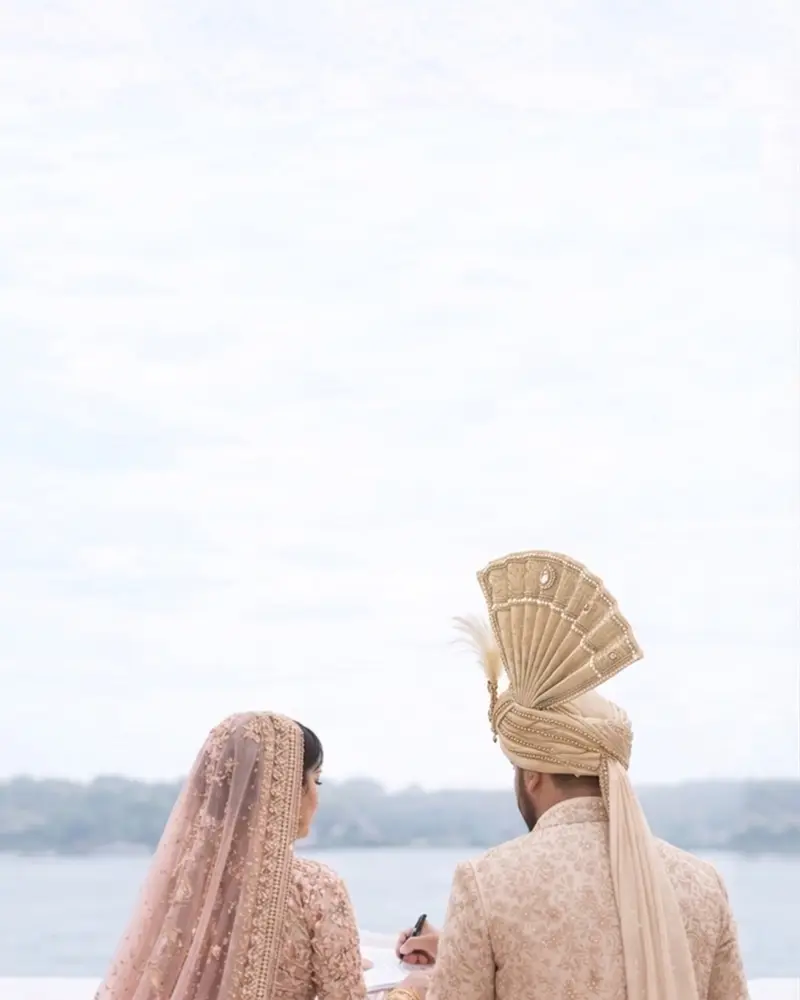
The Nikah is the heart of the Ismaili wedding — the sacred Islamic marriage ceremony held at the Jamatkhana (Ismaili prayer house). The ceremony follows the common Nikah text provided by Ismaili institutions, reflecting Islamic principles and Ismaili traditions under the guidance of the Aga Khan.
Each family selects a Wakil (advocate), who must be over 18, to represent the bride and groom. The Wakils negotiate the Haq Mahr — the obligatory marriage gift from the groom to the bride, her exclusive right under Islamic law.
The Nikah is officiated by the Mukhi Kamadia (Ismaili community officials). The couple submits their vows and signs the Nikah contract before witnesses. Marriage in the Shia Ismaili tradition is a social contract involving mutual consent and definite rights and responsibilities — both parties must freely consent.
As the couple exits the Jamatkhana, a coconut is smashed on the ground to ward off evil spirits and invoke blessings, accompanied by joyful cheers. The Nikah is a formal, dignified ceremony reflecting the community's blend of Islamic reverence and progressive values.
Why it matters
The Nikah is the legally and spiritually binding marriage contract in Islam. For Ismailis, holding the ceremony at the Jamatkhana connects the marriage to the spiritual guidance of the Imam (the Aga Khan) and the community's faith tradition. The Haq Mahr affirms the bride's financial rights and independence within the marriage. The coconut smashing at the exit symbolises the breaking of barriers and the opening of a blessed new chapter.
In LaddoThis: a Nikah checklist with 15 tasks, 4 of them things to buy or prepare.
Khoba Khobi کھوبا کھوبی
Wedding Day
The playful ring-finding game in a bowl of rice
Khoba Khobi (also spelled Koba Kobi or Khoba Kutti) is one of the most entertaining and beloved post-Nikah rituals in the Ismaili wedding tradition. The couple sits facing each other with a large bowl of rice between them. A coin or ring is dropped into the rice, and both bride and groom plunge their hands in to find it.
The race is on — whoever finds the ring or coin first is playfully declared the one who will "rule the household." Family and friends gather around, cheering for their respective side, creating an atmosphere of laughter and joy. The game is repeated seven times, with the bride scooping rice and passing it to the groom in between rounds.
After the ring-finding game, the bride and groom's families perform the same playful ritual with the bride. The ceremony concludes with the couple feeding each other sweet milk (doodh), symbolising the sweetness and nourishment they will bring to each other's lives throughout their marriage.
Khoba Khobi is a light-hearted tradition designed to encourage happiness, laughter, and playful bonding between the newlywed couple.
Why it matters
Khoba Khobi symbolises the couple's first shared experience as husband and wife — working together (and competing playfully) in a spirit of joy. The rice represents abundance and fertility. The sweet milk feeding represents mutual nourishment, care, and the sweetness of married life. The tradition reinforces that marriage should be built on laughter and companionship.
In LaddoThis: a Khoba Khobi checklist with 6 tasks, 5 of them things to buy or prepare.
Shinda شنڈا
Wedding Day
The bride's farewell — blessings and coconut breaking as the couple departs
The Shinda is the emotional and spiritually charged sendoff ceremony for the bride, marking her departure from her family home to begin her new life. It is the Ismaili equivalent of the Rukhsati (bride's farewell) in broader South Asian Muslim traditions.
The ceremony is led by the bride's mother, who wraps a betel nut (supari) in a bandni (traditional wedding shawl). Holding the wrapped betel nut in her hand, she makes seven circular motions around the bride and groom, invoking blessings and protection. The betel nut is then cast off and thrown behind the couple. This ritual is repeated three more times, with each betel nut thrown in a different cardinal direction — north, south, east, and west — symbolically banishing evil spirits to the four corners of the earth and clearing the couple's path.
As the bride and groom prepare to leave, the bride's brother places a coconut under the front wheel of the wedding car. When the car drives away, the coconut is crushed — symbolising prosperity, generosity, and blessings for the start of their journey together. This moment is often deeply emotional, with tears of joy and sadness as the bride bids farewell to her family.
Why it matters
The Shinda's four-directional betel nut casting is a powerful protective ritual, clearing the couple's path in all directions. The coconut breaking under the car wheel symbolises the breaking open of abundance and the beginning of a fruitful journey. The mother's role in leading the ceremony represents the ultimate blessing — a mother's prayer for her daughter's happiness.
In LaddoThis: a Shinda checklist with 8 tasks, 5 of them things to buy or prepare.
Reception استقبالیہ
Wedding Day
The grand celebration with dinner, dancing, speeches, and festivities
The Reception is the grand celebratory event of the Ismaili wedding, typically held on the evening of the Nikah day or the following evening — a modern, festive affair blending South Asian warmth with contemporary elegance.
The evening begins with a cocktail hour as the couple prepares for their entrance. Parents and the bridal party are introduced first, followed by the couple's grand entrance — often with their favourite song and dramatic lighting.
Key moments include the first dance, cake cutting, father-daughter and mother-son dances, and speeches from family and friends. Many Ismaili receptions feature the popular "shoe game" — the couple sits back-to-back and answers questions by holding up each other's shoes.
Dinner is a multi-course meal reflecting the family's culinary heritage, whether Gujarati-Khoja, Pakistani, or East African. A slideshow of the couple's journey is a common highlight. The evening culminates with open dancing, blending Bollywood hits, Western music, and community favourites.
Why it matters
The reception is the public celebration of the marriage, bringing together the wider community of friends, family, and colleagues. It reflects the Ismaili community's embrace of both tradition and modernity — honouring cultural roots while celebrating in a contemporary, inclusive style.
In LaddoThis: a Reception checklist with 14 tasks, 5 of them things to buy or prepare.
Walima ولیمہ
Day After — Walima & Satada
The groom's family hosts a celebratory feast after the Nikah
The Walima is the wedding banquet hosted by the groom's family, traditionally held the day after the Nikah ceremony. It is a joyous celebration marking the public announcement of the marriage to the wider community and extended family.
The Walima is rooted in Islamic tradition — the Prophet Muhammad (PBUH) encouraged hosting a feast after marriage, making it one of the Sunnah practices observed by Ismaili families. The groom's family takes full responsibility for the organisation and costs of this event.
The evening features a grand dinner, often showcasing the groom family's culinary heritage. Guests offer their congratulations and blessings to the newlywed couple. The atmosphere is warm, communal, and celebratory — less formal than the reception but equally significant.
In many Ismaili families, the Walima serves as an opportunity for the groom's extended family and friends who may not have attended the Nikah to meet the bride and celebrate the union.
Why it matters
The Walima fulfils a Sunnah tradition in Islam, making it both a cultural and religious obligation. It represents the groom's family publicly accepting and celebrating the marriage. The communal feast embodies the Islamic values of generosity, hospitality, and shared joy.
In LaddoThis: a Walima checklist with 7 tasks, 3 of them things to buy or prepare.
Satada ساٹادا
Day After — Walima & Satada
A casual post-wedding lunch for close family and friends
The Satada is the final event in the multi-day Ismaili wedding celebration — a relaxed, intimate lunch held for close family and friends, typically the day after the reception or Walima. After days of elaborate ceremonies, dressing up, and formal events, the Satada offers a welcome wind-down.
The gathering is deliberately casual — families come together in comfortable clothing, often at a restaurant or at home, to share a simple meal. It is a time for reflection, gratitude, and warm conversation. The newlywed couple thanks their families for the wedding celebrations, and close relatives share stories, advice, and well-wishes.
The Satada is beloved for its simplicity and warmth. After the intensity of the wedding festivities, it provides a gentle, loving closure to the celebrations and marks the beginning of the couple's everyday life together.
Why it matters
The Satada represents the return to normal life after the grandeur of the wedding. Its casual, intimate nature symbolises that the strongest bonds are built not in grand gestures, but in quiet, everyday moments of togetherness. It is the community's way of sending the couple off into married life with warmth and simplicity.
In LaddoThis: a Satada checklist with 5 tasks, 3 of them things to buy or prepare.
Chauthi چوتھی
Post-Wedding
The bride's first return to her parents' home on the fourth day
The Chauthi takes place on the fourth day after the wedding, when the bride visits her parental home for the first time as a married woman. She is accompanied by her husband, and they are warmly received by her family.
The bride's parents host a special dinner in honour of the couple. It is a deeply emotional occasion — the first time the bride returns home since her Shinda (farewell). Her family showers the couple with gifts, blessings, and affection. The evening is intimate and familial, filled with conversation, laughter, and sometimes playful traditions.
The Chauthi reaffirms that the bride's connection to her natal family remains strong and cherished, even as she begins her new life. It is a reassuring tradition for both the bride and her parents, emphasising that marriage is the joining of two families, not the separation of one.
Why it matters
The Chauthi symbolises continuity — the bride's bond with her birth family endures through marriage. The fourth-day timing carries cultural significance in South Asian traditions. The dinner hosted by the bride's parents is an expression of their continued love and support for their daughter and their welcome of the groom into the family.
In LaddoThis: a Chauthi checklist with 5 tasks, 4 of them things to buy or prepare.